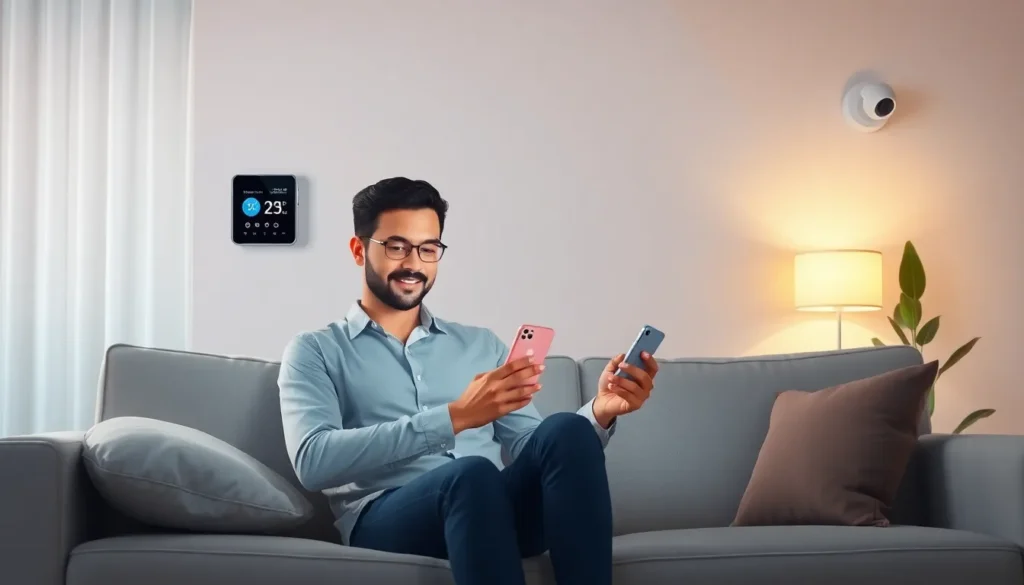
Imagine a world where your home responds to your every whim, all from the palm of your hand. With mobile-controlled homes, that fantasy is now a reality. Gone are the days of fumbling for light switches or manually adjusting the thermostat. Instead, it’s all about swiping, tapping, and maybe even a little voice command magic.
Overview Of Mobile Controlled Homes
Mobile-controlled homes integrate advanced technology into everyday living. These systems allow individuals to manage several aspects of their homes directly from mobile devices, enhancing comfort and efficiency. Home automation includes features like smart lighting, temperature control, and security systems.
Smart lighting systems enable users to customize brightness and color settings. They can create schedules and activate lights remotely, providing convenience at any time. Temperature control systems optimize heating and cooling based on user preferences. Residents can adjust settings via an app, ensuring an ideal environment.
Security systems also benefit from mobile control. Users receive real-time notifications through their devices, monitoring for unusual activity. With the ability to view live camera feeds or remotely lock doors, safety becomes a priority. Many systems also support integration with voice assistants for enhanced usability.
Home automation technology promotes energy efficiency. Users can track energy consumption patterns and make adjustments that contribute to lower utility bills. Data collected from these systems helps homeowners discern usage trends and implement effective strategies.
Furthermore, mobile-controlled homes support accessibility. Individuals with mobility challenges can control various home features without physical effort. By utilizing customized interfaces, technology becomes more user-friendly for everyone.
As the demand for smart homes increases, so does the variety of available devices. Many companies offer solutions compatible with existing smart home ecosystems. Each device provides unique functionalities, allowing homeowners to tailor their smart environments.
Overall, mobile-controlled homes represent a significant step towards modern living, merging convenience, security, and efficiency. Embracing this technology creates a seamless experience that enhances daily life.
Benefits Of Mobile Controlled Homes
Mobile-controlled homes offer various advantages, making daily tasks simpler and more efficient. Enhanced automation allows individuals to manage their living spaces remotely, improving overall quality of life.
Increased Convenience
Convenience represents a key benefit of mobile-controlled homes. Homeowners can adjust lighting, heating, and appliances from their smartphones, eliminating the need for manual changes. Scheduling features allow for automatic adjustments at designated times, which aligns with individual routines. Users benefit from pre-programmed settings, offering personalized experiences based on their needs. Additionally, accessing various home features from a single device simplifies daily tasks, encouraging a seamless living environment. Remote management reduces the hassle of walking back and forth through the house, making it easier to control multiple functions with just a few taps.
Enhanced Security
Security in mobile-controlled homes increases significantly. Homeowners receive instant notifications about any unusual activities, allowing for swift responses. With camera systems accessible via mobile devices, users can monitor live feeds from anywhere, providing peace of mind. Remote locking and unlocking of doors enhance safety, ensuring individuals can secure their home even when away. Integration with alarm systems allows for immediate alerts in case of breaches, thereby protecting property and residents. Customizable settings let users tailor their security preferences according to their lifestyle, offering comprehensive protection. Altogether, these features create a safer, more secure living environment with less effort required.
Key Features To Consider
Mobile-controlled homes offer several essential features that enhance convenience and efficiency. Individuals should evaluate specific functionalities to optimize their living experience.
Smart Devices Integration
Smart devices seamlessly integrate into mobile-controlled homes. These devices include smart thermostats, security cameras, and lighting systems. Users can easily connect various appliances for centralized control. Many products are compatible with popular platforms, allowing homeowners to create customized routines. Integration simplifies management, ensuring compatibility across different brands. This flexibility enhances user experience by providing options to expand and upgrade systems as needed.
User-Friendly Interface
User-friendly interfaces are crucial for mobile-controlled homes. Intuitive apps invite easy navigation for all users, regardless of technical expertise. Clear displays help individuals monitor and control settings efficiently. Configurable dashboards allow personalization, so users can prioritize functions most important to them. Additionally, voice control features enhance accessibility, accommodating users with differing abilities. Engaging users through straightforward interactions encourages frequent use and maximizes the benefits of home automation.
Popular Mobile Controlled Home Solutions
Mobile-controlled home solutions include a range of innovative products designed to streamline everyday living. Many homeowners now enjoy the convenience and efficiency these technologies provide.
Leading Brands
Nest, Philips Hue, and Ring dominate the market. Nest specializes in smart thermostats and security cameras, enhancing energy efficiency and home security. Philips Hue offers customizable lighting solutions, enabling users to tailor brightness and color, enhancing ambiance. Ring focuses on security systems, providing video doorbells and cameras that allow remote monitoring. Each brand prioritizes integration capabilities, creating a seamless experience for users.
Comparison Of Features
Customizability stands out as a primary feature across devices. Nest’s thermostats learn user preferences, automating heating and cooling efficiently. Philips Hue supports color variations and schedules for lighting, adapting to different needs. Ring provides real-time alerts and two-way communication through its devices, enhancing security. Energy efficiency metrics, user-friendly interfaces, and compatibility with other smart devices are key considerations for users. Homeowners can choose solutions based on specific functionalities to meet their unique requirements.
Challenges And Considerations
Mobile-controlled homes face several challenges that impact their implementation and usability.
Privacy Concerns
Privacy concerns arise with mobile-controlled homes as interconnected devices collect and transmit personal data. Hackers can exploit vulnerabilities in these systems, potentially accessing sensitive information. Unauthorized surveillance from compromised security cameras can threaten user confidentiality. Users need to prioritize the selection of reputable brands that provide robust security measures. Regular software updates can strengthen system defenses, while strong passwords further safeguard personal data. Transparency about data usage from manufacturers contributes to trust in these technologies.
Technical Limitations
Technical limitations often hinder the full potential of mobile-controlled homes. Internet connectivity issues can disrupt the functionality of smart devices, leading to frustration. Compatibility across various brands may not always exist, complicating integration processes. Device malfunctions can occur due to software bugs or outdated firmware. Additionally, battery life for certain devices may result in unplanned downtimes. Recognizing these limitations allows homeowners to make informed decisions when investing in smart technologies.
Future Trends In Mobile Controlled Homes
As technology continues to advance, mobile-controlled homes will incorporate artificial intelligence for enhanced automation. AI can predict user behavior and adjust home settings accordingly, creating a personalized living experience.
Integration of voice-activated assistants plays a significant role in this trend, allowing hands-free control over home systems. Homeowners can give commands to devices like lights, thermostats, and security cameras, adding convenience to everyday tasks.
Increasing emphasis on energy efficiency will drive innovations in smart appliances. These appliances can optimize their performance based on real-time energy consumption data, ultimately reducing utility costs.
Robust integration of cybersecurity measures will become essential as more devices connect online. Ensuring that data privacy is protected against potential threats will remain a top priority for manufacturers.
Wearable technology will also influence mobile-controlled home systems. Smartwatches and fitness trackers can offer seamless interactions with home automation, enabling users to manage home functions on the go.
Cross-platform compatibility will enhance ecosystem connectivity among various devices. By ensuring that different brands and products work together, homeowners can create a truly integrated smart environment.
Sustainability will gain importance in the design of mobile-controlled homes. Many devices will utilize eco-friendly materials and energy sources, aligning with consumer demand for greener technologies.
These trends signify a continuous evolution in mobile-controlled home technology, paving the way for more intuitive, efficient, and connected living spaces. Users can expect a future filled with smart innovations that further enhance comfort and security in their homes.
Mobile-controlled homes are revolutionizing everyday living by providing unparalleled convenience and security. As technology continues to advance, homeowners can expect even more intuitive and efficient solutions that cater to their unique needs. The seamless integration of smart devices not only enhances comfort but also promotes energy efficiency and safety.
While challenges like privacy concerns and technical limitations exist, informed decisions and proactive measures can mitigate risks. Embracing the future of home automation opens doors to a lifestyle that prioritizes ease and connectivity. With ongoing innovations on the horizon, mobile-controlled homes are set to redefine modern living for years to come.