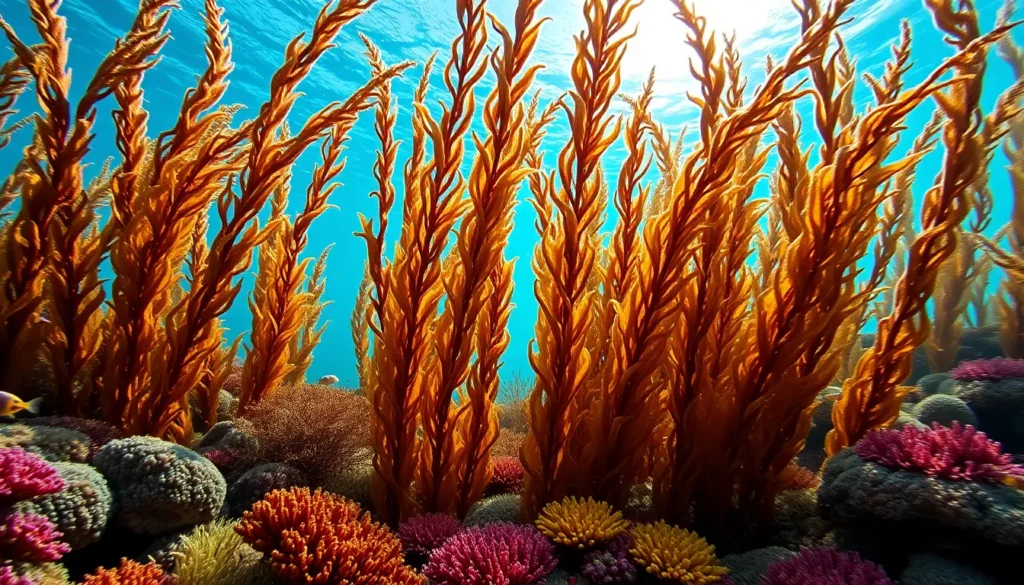
The ocean isn’t just home to fish and mermaids; it’s a vibrant garden filled with fascinating plants that deserve the spotlight. From the majestic kelp forests swaying with the currents to the colorful corals that look like they’re auditioning for a fashion show, ocean plants are the unsung heroes of the underwater world.
Overview Of Ocean Plants
Ocean plants, also known as marine plants, play a crucial role in maintaining the health of marine ecosystems. Seagrasses, for instance, provide habitat and food for a variety of marine life, including fish and invertebrates. These flowering plants thrive in shallow waters, often forming extensive underwater meadows.
Kelp, another significant ocean plant, forms towering underwater forests. Kelp forests support diverse marine species, creating a rich ecosystem. This large brown algae can grow up to 2 feet per day, providing shelter and nutrients for countless organisms. The presence of kelp also contributes to carbon sequestration, helping mitigate climate change.
Coral, though often categorized as animals, relies on symbiotic algae called zooxanthellae. These algae perform photosynthesis, supplying energy to corals while enhancing the overall health of coral reefs. Coral reefs, teeming with marine life, protect coastlines and support local fisheries.
Phytoplankton, microscopic in size, forms the foundation of the oceanic food web. These tiny plants produce between 50% to 85% of the Earth’s oxygen. They thrive in sunlit upper layers of water, where they convert sunlight into energy through photosynthesis.
Mangroves, found in coastal regions, serve as vital transition zones between land and sea. These unique plants reduce coastal erosion while providing habitat for various species. Their complex root systems stabilize shorelines and protect against storm surges.
Together, these ocean plants form a complex and interconnected web of life that sustains marine ecosystems and contributes to global environmental health.
Types Of Ocean Plants
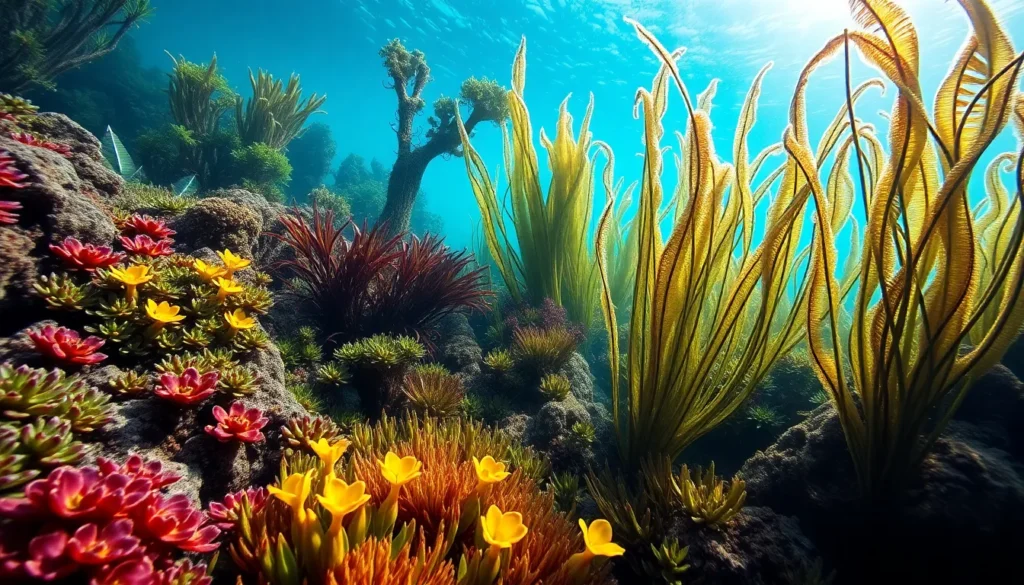
Ocean plants are diverse and play vital roles in marine ecosystems. Several types of ocean plants contribute uniquely to underwater environments.
Algae
Algae encompass a broad category of photosynthetic organisms found in marine environments. These organisms range from microscopic phytoplankton to large brown seaweeds. Various species of algae provide food for marine creatures, support habitat formation, and produce oxygen. Some well-known types include red algae, green algae, and diatoms. Colorful and fascinating, algae create essential ecosystems in shallow waters and contribute significantly to global oxygen production.
Seagrasses
Seagrasses thrive in shallow coastal waters and form underwater meadows. These flowering plants support various marine animals, including fish, crabs, and sea turtles. Seagrasses stabilize sediments and improve water quality, which benefits the entire ecosystem. Known species include eelgrass, turtle grass, and manatee grass. Seagrasses are crucial for coastal protection and serve as nurseries for juvenile fish, promoting biodiversity.
Kelp
Kelp forests rise dramatically from seafloors, creating vibrant underwater habitats. These large brown algae can grow several feet in height, providing shelter for numerous marine species. Kelp supports a wide range of organisms, from fish to invertebrates, forming complex ecosystems. Different types, such as giant kelp and bull kelp, grow quickly and contribute to carbon sequestration. Kelp forests also mitigate wave energy, protecting shorelines and maintaining coastal health.
Ocean Plants Names And Pictures
Ocean plants exhibit remarkable diversity, contributing significantly to marine ecosystems. Below are some common and rare ocean plants with brief descriptions.
Common Ocean Plants
Seagrasses provide vital habitats, offering shelter and food for various marine animals. Kelp, a large brown algae, forms underwater forests that support many fish and invertebrate species. Algae can be microscopic, such as phytoplankton, or large forms like red and green seaweeds, which provide essential oxygen and serve as food. Coral’s symbiotic relationship with algae enhances reef health, supporting diverse marine life and coastal resilience.
| Common Plant | Description |
|---|---|
| Seagrasses | Habitat for marine species. |
| Kelp | Forms forests, enhances ecosystems. |
| Phytoplankton | Microscopic producers of oxygen. |
| Coral | Supports reefs; relies on symbiotic algae for energy. |
Rare Ocean Plants
Certain ocean plants are less common yet essential for maintaining biodiversity. The red mangrove emerges along coastlines, stabilizing sediments and providing shelter for juvenile fish. Sea turtles frequently feed on turtle grass, a specific type of seagrass found in designated areas. Coralline algae, which appears crusty and calcified, plays a role in reef formation, contributing to habitat structure. Other rare specimens include giant kelp, which grows quickly and forms unique underwater ecosystems.
| Rare Plant | Description |
|---|---|
| Red Mangrove | Stabilizes sediments, shelters marine life. |
| Turtle Grass | Nourishes sea turtles in specific regions. |
| Coralline Algae | Aids in reef formation, enhancing habitat structure. |
| Giant Kelp | Grows rapidly, creating rich underwater ecosystems. |
Importance Of Ocean Plants
Ocean plants play crucial roles within marine ecosystems, supporting diverse life forms and promoting environmental health. Their contributions extend beyond the ocean, impacting global systems.
Ecosystem Benefits
Ocean plants provide vital habitat and food sources for numerous marine species. Seagrasses create dense underwater meadows that stabilize sediments and enhance water quality. Kelp forests act as dynamic ecosystems, fostering marine biodiversity and acting as carbon sinks that mitigate climate change. Phytoplankton, although microscopic, supports the oceanic food web and produces up to 50% of the Earth’s oxygen. Additionally, mangroves protect coastlines from erosion and serve as nurseries for various fish species. Collectively, these plants contribute to a balanced and thriving marine ecosystem.
Human Uses
Beyond ecological benefits, ocean plants offer significant human applications. Algae find use in food products, such as sushi and supplements, due to their nutritional value. Medicinal uses include extracting compounds for pharmaceutical applications. Kelp serves as a source of alginate, widely utilized in the food and cosmetic industries. Seagrasses contribute to coastal protection, shielding human communities and promoting recreational activities like snorkeling. Mangroves support local economies through fisheries and tourism, emphasizing their importance in human livelihoods.
Ocean plants are essential to the health of marine ecosystems and the planet as a whole. Their diverse forms and functions create vibrant habitats that support countless marine species. From the towering kelp forests to the delicate seagrass meadows, these plants play a vital role in maintaining biodiversity and promoting environmental stability.
Recognizing the significance of ocean plants not only enhances appreciation for marine life but also underscores the need for their conservation. Protecting these underwater wonders is crucial for sustaining the delicate balance of oceanic ecosystems and ensuring a healthy future for both marine life and human communities.